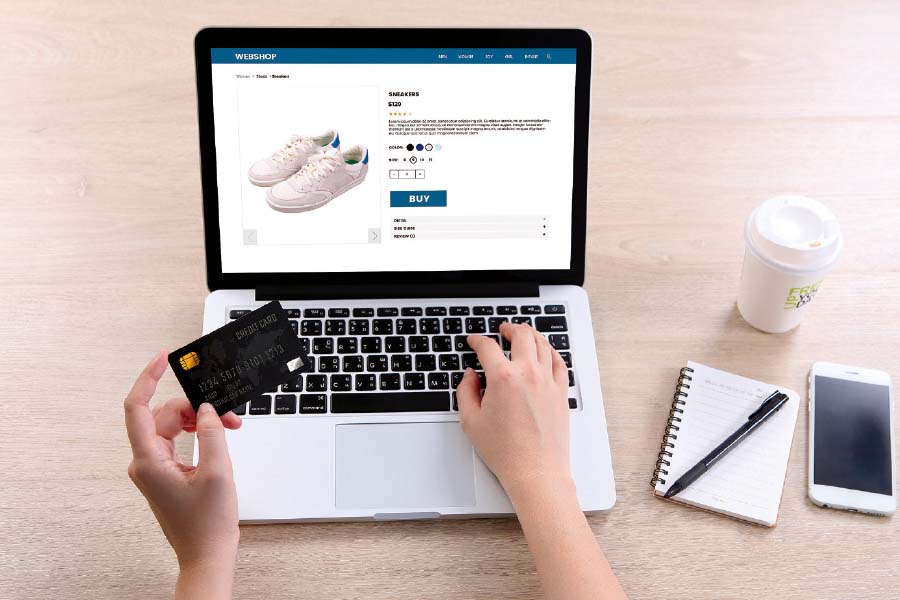
Mexico entered 2026 with the kind of credential any economy ministry would want to frame: eighth place worldwide in eCommerce penetration. The 2026 Online Sales Study by the Mexican Association of Online Sales (AMVO) puts it in clear numbers: digital commerce now represents 17.7% of the country’s retail sales. With that level of penetration, Mexico surpasses economies often cited as global benchmarks — including the United States, Denmark and Singapore. For every 100 pesos Mexican consumers spend in retail, nearly 18 now move through a screen. The market reached 941 billion pesos — about US$52 billion — and the base of digital buyers doubled in seven years to 77.2 million people, even as Mexico’s economy grew by only 0.8%.
It is a tempting headline: Mexico is beating the United States in eCommerce. And in the strict sense of the metric, it is true. The problem is not that the data is false, but that it measures one thing and is often interpreted as if it measured another. Penetration is a ratio: online sales divided by total retail sales. Mexico ranks high in that fraction partly because its denominator — physical retail — is comparatively smaller and more fragmented. The United States, according to the Census Bureau, is around 16.3% penetration; under the adjusted methodology used by Digital Commerce 360, which excludes categories that are rarely sold online, the figure rises to 23.1%. In other words, depending on how it is measured, the U.S. either loses or wins. What does not change under any methodology is scale: the U.S. market is worth roughly US$1.3 trillion — about 25 times larger than Mexico’s.
The Number Mexico Is Winning — And the One That Really Matters
It is important to separate digital maturity from operational maturity, because the ranking tends to blur the two. Mexico does show real digital maturity: 77.2 million online buyers, marketplaces such as Mercado Libre and Amazon dominating the conversation, and 19.2% channel growth in 2025, according to AMVO. But the association itself tempers the triumphalism with an honest paradox: three out of four buyers still have room to develop their digital maturity. Translation: Mexicans already buy online, but they still do not buy like consumers in a truly mature market. High penetration coexists with relatively low sophistication.
The difference with the United States is not about who sells more online — there is no contest there — but about where the next retail battle is being fought. In the U.S., the retail conversation has already moved toward agentic automation: conversational assistants that close sales and manage incidents with minimal friction, predictive logistics and artificial intelligence that reorganizes inventory. In Mexico, meanwhile, the battle is still largely about prices and square footage.
Digital Maturity Built on Physical Retail Still Under Reconstruction
The most revealing 2026 data point is not digital. It is physical. According to ANTAD’s 2025 Results and 2026 Outlook, Mexican retail opened 1,700 compact or specialized stores over the past year and expects to open more than 3,600 stores in 2026, with two new chains entering the country. Same-store sales — the real thermometer of consumption — are projected to grow 3.9%, although in 2025 that indicator advanced only 3.1%. The sector is growing more through expansion than through organic momentum. Walmart, which announced a 43 billion peso investment with a quarter of it allocated to new stores, is betting its growth on the Bodega Aurrera Express format. The hypermarket is giving ground to proximity retail.
That physical reconfiguration is the real story. A country that boasts digital leadership is, at the same time, rebuilding its operational capillarity from the ground up to compete on proximity and delivery speed. Digital maturity is running ahead of the infrastructure that should support it.
Shein and Temu: The Pressure Started to Reverse
The story that Asian marketplaces had established chains such as Liverpool and Sears against the ropes was true — until it stopped being entirely true. In 2026, the wind changed direction. Since January 1, Mexico imposed tariffs of up to 50% on 1,463 tariff lines that directly affect the Shein and Temu model; Profeco placed them under scrutiny for their return policies and advertising; and globally, data provider ECDB projects that Temu will slow from annual growth of 530% to just 13.4%, while Shein will slow to 6.5%. The advantage that supported both platforms — de minimis rules and unbeatable prices — is being eroded by regulation, not by competition. Liverpool, for its part, is not the analog dinosaur in the story: it already generates 31.4% of its sales through digital channels, although it faces a more cautious consumer and rising logistics costs.
Labubus, Ternurines and the Economy of Collectible Desire
If anything confirms that Mexican eCommerce is already playing in the global cultural league, it is a seemingly anecdotal data point that reveals a deeper trend: Ternurines, Sonny Angels and Labubus account for 90% of toy sales in the country’s eCommerce market, according to Marketing4eCommerce. The collectible phenomenon — fueled by artificial scarcity, surprise unboxing and social media — is also exploding in the United States and across Latin America, but in Mexico its weight is disproportionate. It proves that Mexican consumers are not buying differently: they are buying what the world is buying, at the same time.
That is the lesson the ranking does not tell. Being eighth in the world in eCommerce penetration is a real achievement, but it is a snapshot of demand, not of the ability to serve it. Mexico’s true unfinished task is not climbing one more spot in a percentage table — where the ranking depends on methodology and on how large the physical retail base is underneath — but closing the gap between a consumer who already lives digitally and an operation that is still learning how to deliver to that consumer.
Mexico is beating the United States on the ratio; it still has a long way to go on the numerator. And while U.S. retailers are debating how to make an AI agent close the sale, Mexico is still debating the cost of shipping and where to place the next store. That, not the eighth-place ranking, is the number that will define who matures first.