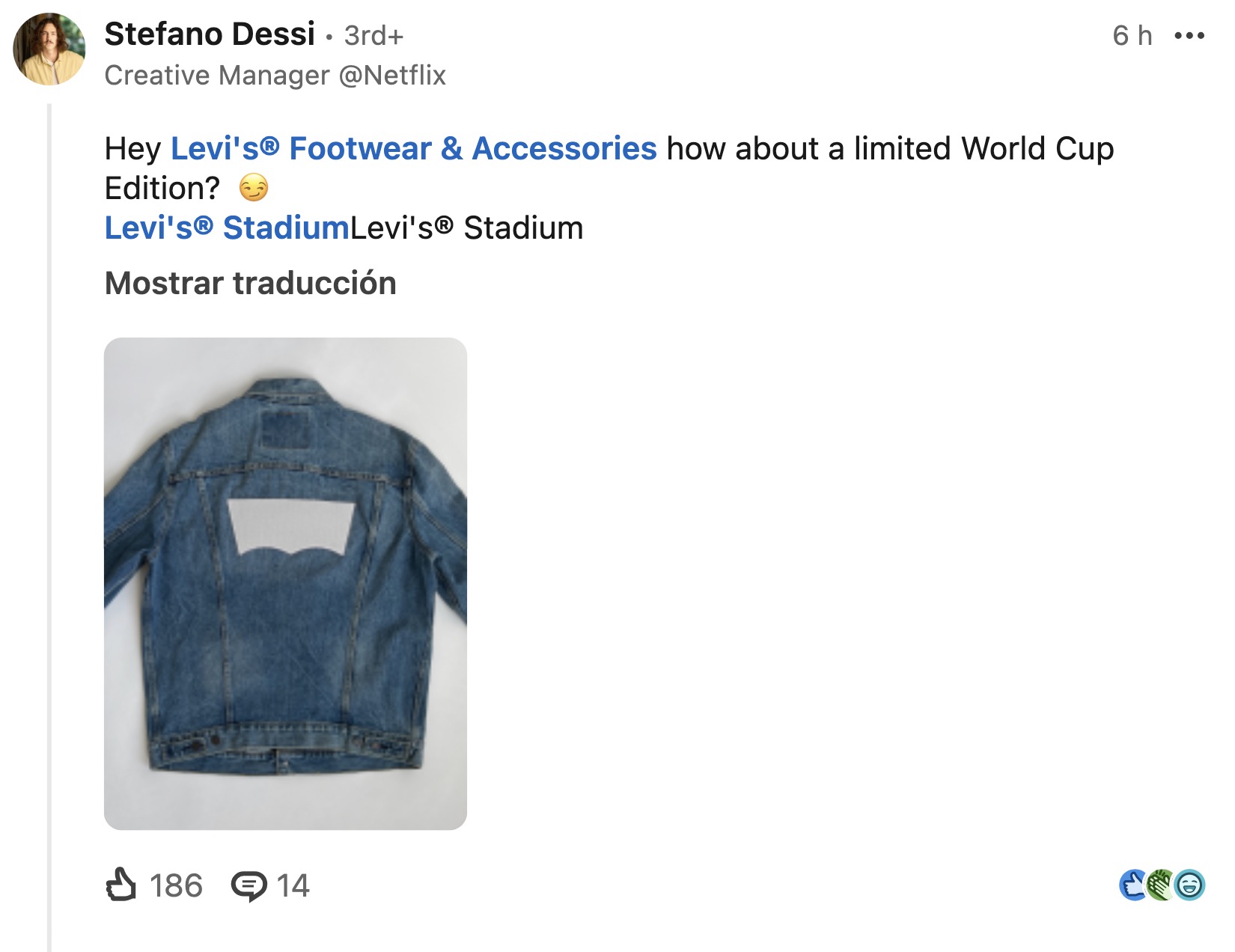
Some brands need to show their name to be recognized. Others remain in the consumer’s mind even when they are covered. The viral image of a denim jacket featuring the white silhouette of Levi’s covered logo is more than a creative wink: it is a brutal branding lesson on the eve of the World Cup.
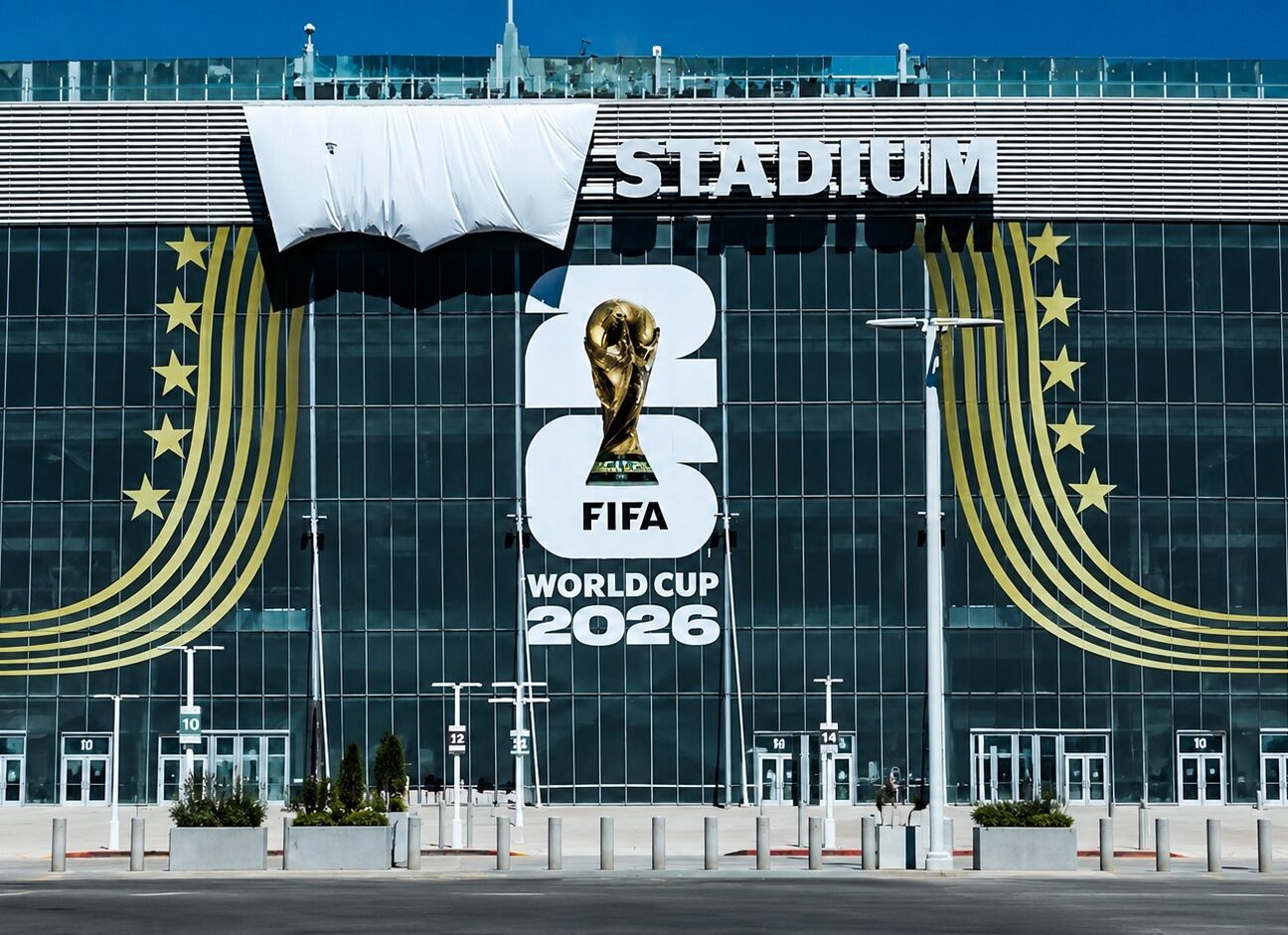
The context is clear. During the World Cup, several stadiums with commercial names must adopt neutral names to comply with the tournament’s brand protection rules. FIFA explains in its brand protection section that so-called “Clean Zones” around stadiums and official sites are designed to protect the integrity of its commercial program and restrict unauthorized brand activities on match days and surrounding dates.
That is why Levi’s Stadium officially appears as San Francisco Bay Area Stadium during the tournament; Mercedes-Benz Stadium becomes Atlanta Stadium; MetLife Stadium operates as New York New Jersey Stadium; and other venues such as AT&T Stadium, SoFi Stadium, Hard Rock Stadium and Gillette Stadium also temporarily lose their commercial names. Outlets such as Times Union and The Guardian have documented this process of neutral “renaming” as part of FIFA’s sponsorship rules.
When Erasing a Brand Makes It More Visible
What makes the Levi’s case fascinating is that the restriction ended up producing the opposite effect. By covering the stadium logo, the brand’s silhouette remained recognizable. The name disappeared, but the visual code stayed. And that is where the difference between branding and brand equity becomes clear.
Branding creates signs: logos, names, typefaces, colors, sponsorships, stadiums and packaging. Equity happens when those signs no longer need to be explained. When a shape is enough. When the consumer mentally completes what the brand is no longer allowed to say.
On LinkedIn, Stefano Dessi, Creative Manager at Netflix, responding to the original post by James O’ Connor, turned that reading into a brilliant provocation by suggesting a limited edition to Levi’s Footwear & Accessories inspired by the situation: a World Cup denim jacket whose greatest attribute would be precisely that blank space. The idea works because it does not need to mention the tournament. It does not need to use protected crests, mascots or names. It only needs to activate a silhouette that millions already recognize.
That is the most powerful point: FIFA can regulate physical space, but it cannot regulate cultural memory. It can order a stadium to change its name for a few weeks, but it cannot stop the public from calling it what they have known it as for years.
The phenomenon is not exclusive to Levi’s. The case of Estadio Azteca is even stronger on an emotional level. For FIFA, the venue appears as Mexico City Stadium in the tournament’s official information. Yet for fans, the press and soccer history, it remains the Azteca: the stadium of Pelé in 1970, Maradona in 1986 and the opening match of 2026. The Guardian summed it up by noting that although the stadium was officially renamed Mexico City Stadium, its World Cup legacy remains intact.
There, the brand does not depend on a sponsor, but on sporting memory. The name Azteca operates as emotional heritage. Changing it on signage does not change what it means.
Mercedes-Benz Stadium offers another angle. During the World Cup, it will be Atlanta Stadium, but its circular architecture, retractable roof and reputation as one of the most modern venues in the United States remain connected to the brand that gives it its name outside the tournament. Even Atlanta 2026’s official site presents the World Cup venue as Atlanta Stadium, but when describing it, it recognizes the weight of Mercedes-Benz Stadium as a multipurpose facility and a benchmark for fan experience.
The same happens with MetLife, AT&T, SoFi and Hard Rock. FIFA can neutralize names to protect its official sponsors, but each stadium carries a previous identity that lives in maps, tickets, memories, broadcasts, photographs, merchandise, sports culture and public conversation.
The Big Lesson for Brands
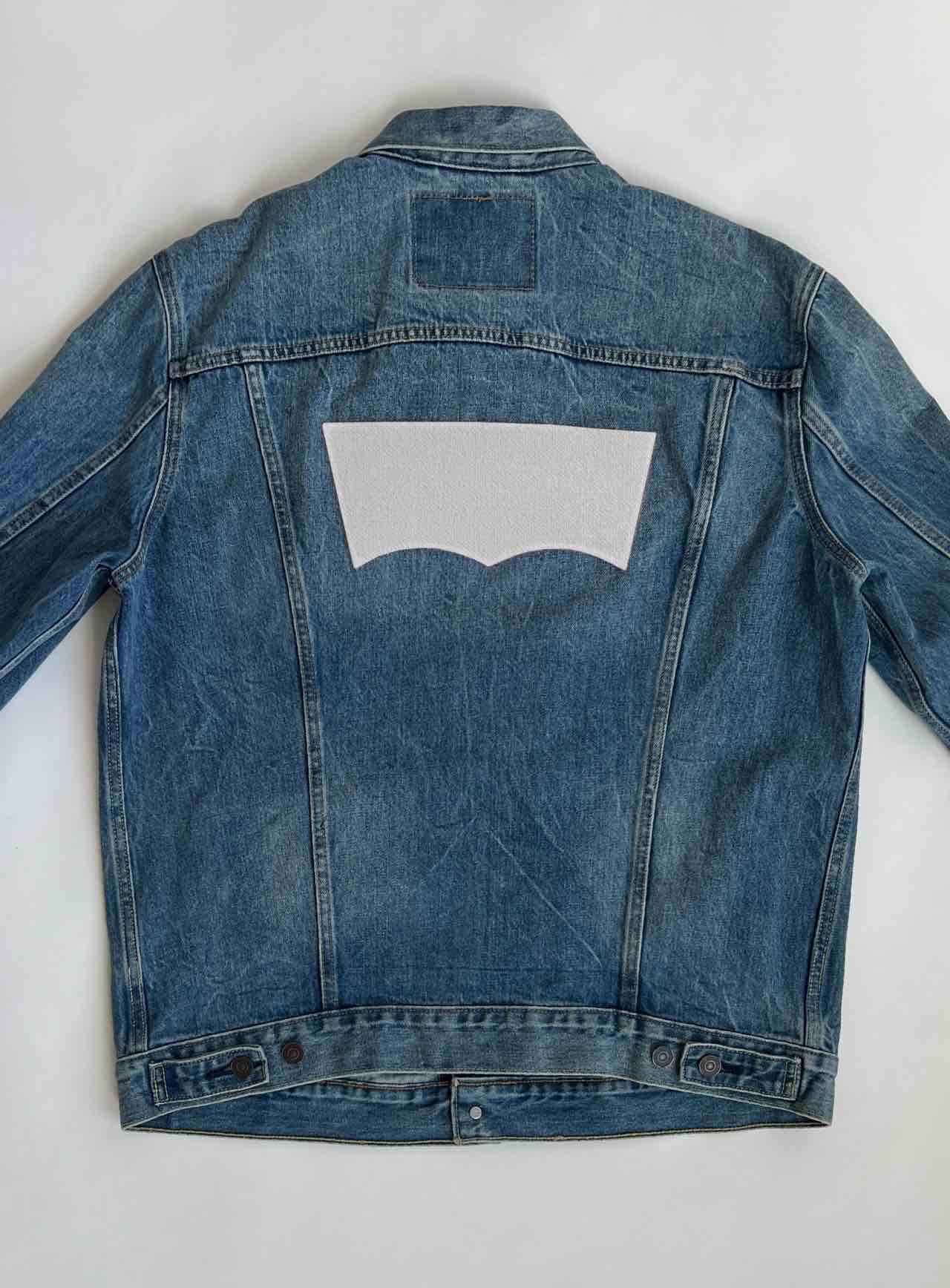
The case shows that a brand’s greatest asset is not always the visible logo, but the ability to be recognized even when the logo disappears. That is not built with a single campaign. It is built through years of visual consistency, cultural presence, emotional associations and meaningful repetition.
For Levi’s, the opportunity is obvious. A limited edition inspired by that silhouette would not have to directly challenge FIFA. It could do so from the brand’s natural territory: denim, pop culture, sports, California and iconic design. The jacket would work because consumers would understand the message without needing everything to be spelled out.
And that may be the best definition of equity: when a brand no longer needs to be complete to be understood.
FIFA can change names, cover logos and commercially clean its venues. It can turn Levi’s Stadium into San Francisco Bay Area Stadium, Mercedes-Benz Stadium into Atlanta Stadium and the Azteca into Mexico City Stadium. But there is something no regulation can erase: the brands that already live in people’s minds. At the 2026 World Cup, the lesson will not only be about sports. It will also be about branding: when a brand has enough equity, even when covered, it still gains visibility.
Read More:
-
Mexicans Believe Again: “We Can Reach the Final”
-
Inside adidas’ Opening Week Celebration for the World Cup
-
Carta Blanca Beer: The Story of Chiquitibum, Mexico 86 and the Classic Bottle
-
Michelob Ultra Brings Canelo Álvarez to the 2026 World Cup to Present the First Superior Player of the Match Trophy