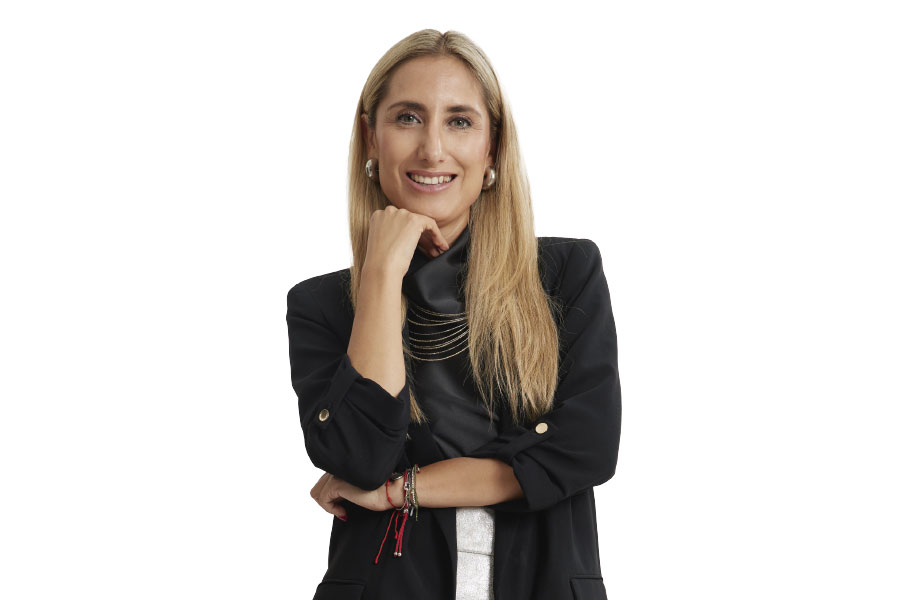
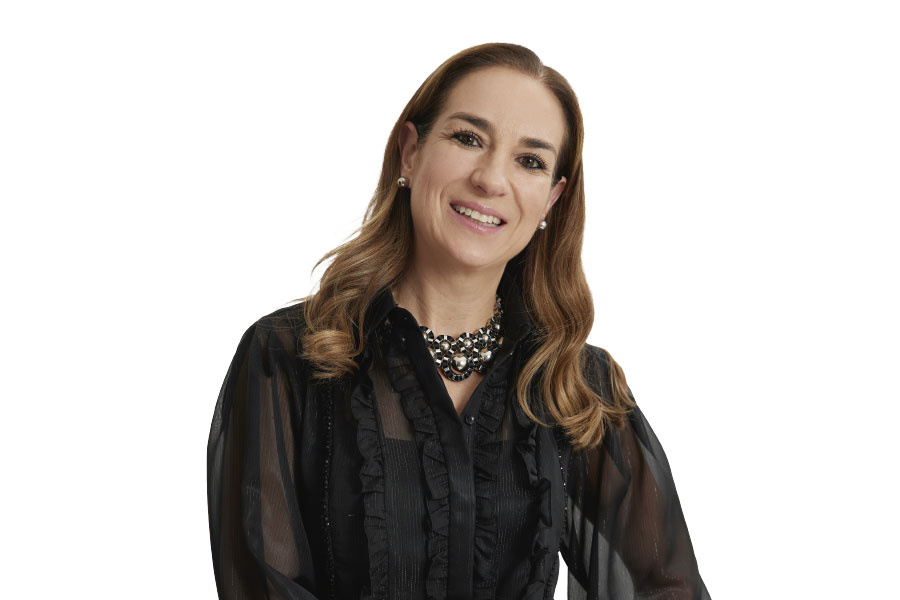
Meta has just sent one of the clearest signals yet about the future of marketing leadership: creativity and communication are no longer enough to drive growth at a technology company. The company announced the appointment of Alex Schultz as its first Chief Data Officer, a newly created position designed to transform how Meta uses data, experimentation, research, and artificial intelligence to make decisions.
Schultz is leaving the Chief Marketing Officer role, which will be filled by Denise Moreno, previously Meta’s global senior vice president of Consumer and Growth Marketing.
The move does not mean the CMO is disappearing. It points to something more complex: responsibilities that were once concentrated within marketing are beginning to be divided among executives capable of leading brand, growth, product, data, and artificial intelligence.
Meta is not reducing the importance of marketing. Instead, it is elevating the strategic value of data to the same level as brand building.
From Leading Marketing to Transforming How Meta Learns
Alex Schultz held an unusual position at Meta: in addition to leading marketing, he also had responsibility for analytics. That combination allowed him to work at the intersection of brand, growth, data, and experimentation. His new role formalizes that experience and turns it into a company-wide capability.
As Chief Data Officer, Schultz will focus on building stronger data foundations, developing AI-powered analytics, strengthening experimentation, and transforming how Meta learns and makes decisions.
The change reflects a reality affecting many companies: artificial intelligence is increasing demand for information, but traditional analytics systems do not always have the speed or structure required to respond.
Organizations can generate thousands of reports, but that does not necessarily mean they are making better decisions. The real challenge is turning data into useful insight for product, marketing, sales, operations, and executive leadership.
Creating the position acknowledges that AI will only be as effective as the quality of the data, the strength of the experimentation processes, and the rigor with which the results are used.
Denise Moreno Takes Over a Growth-Oriented Marketing Organization
Denise Moreno takes over Meta’s global marketing organization after 17 years with the company. Her career began in roles related to email marketing and growth experimentation. Most recently, she served as global senior vice president of Consumer and Growth Marketing.
In that position, she helped promote products including Threads and Meta’s AI-powered glasses, while also contributing to the development of the company’s eCommerce capabilities.
Moreno had already served temporarily as CMO while Schultz focused on preparing for Meta’s antitrust trial against the U.S. Federal Trade Commission. Her appointment represents continuity, but it also reflects an evolution of the function. The new CMO is taking over during one of the most significant transformations in marketing: content automation, personalization at scale, AI agents, new search interfaces, and changing relationships between consumers and platforms.
Moreno has said that AI will provide scale and speed, but should complement human judgment rather than replace it. That distinction will be critical. Meta’s new approach to marketing cannot depend solely on producing more content or automating processes. It must determine what should be automated, what requires human oversight, and how to prevent efficiency from eroding brand differentiation.
Meta Is Not Eliminating the CMO—It Is Redefining the Role
The immediate interpretation may be that Meta is shifting power from marketing to data. However, the new structure suggests a more balanced decision.
Schultz and Moreno will remain part of the company’s leadership team and report to Chief Operating Officer Javier Olivan. Moreno will also join the executive team led by Mark Zuckerberg.
The company is separating two responsibilities that have become too important to remain concentrated in a single role. On one side, the Chief Data Officer will build the infrastructure required to interpret information, develop experiments, and improve decisions through artificial intelligence. On the other, the Chief Marketing Officer will be responsible for turning those capabilities into growth, cultural relevance, product adoption, trust, and brand value.
The risk is that the two functions could become new organizational silos. The restructuring will only work if data and marketing share objectives, information, and decision-making processes.
An analytics infrastructure disconnected from consumers can produce technically sophisticated but commercially irrelevant models. A marketing team without access to reliable data can produce compelling campaigns without understanding their actual impact.
Is the Traditional CMO Disappearing?
The CMO who only managed advertising, media, and communications is losing relevance. Companies now expect marketing to contribute to acquisition, retention, customer experience, product development, commerce, reputation, and financial growth.
That does not mean every marketing leader must become a data scientist. It means they must understand how information is built, which questions models can answer, and where the limits of automation appear.
The CMO also cannot delegate artificial intelligence entirely to the technology organization. The way a company uses data and automation directly affects the customer experience, the brand’s tone, personalization, and trust. That is why the next generation of marketing leaders will need to combine creativity with technological fluency, cultural judgment, and financial expertise.
Marketing is no longer simply the department that communicates what a company does. It is becoming part of the process that defines what the company builds, how it sells it, and how it learns from its customers.
Data Is No Longer a Support Function
The creation of a Global Data Office also shows that information can no longer be managed solely as a technical function.
For years, many companies treated data as an asset stored by technology teams and occasionally consulted by marketing. Artificial intelligence changes that relationship. Data becomes the raw material used to recommend products, personalize experiences, optimize investment, predict behavior, and develop new services.
Without a common structure, every department may end up using different numbers to explain the same business.
The Chief Data Officer is responsible for building that shared foundation, but the role should not be measured by the number of dashboards, models, or platforms deployed. It should be evaluated by the quality and speed of the decisions it helps improve.
Schultz’s appointment also shows that Meta views data as a business capability, not merely an engineering function. His background in marketing and growth allows him to connect analytics infrastructure with commercial questions.
The New CMO Needs Data—but Also Authority
Meta’s move reinforces a trend already visible at other companies: the CMO role is expanding or becoming fragmented as marketing takes on more responsibilities. Some organizations have created leadership positions for growth, experience, customer strategy, digital, commerce, or data. Others have divided those responsibilities among several executives. The question is not which title will survive, but who will have the authority to connect all of these capabilities.
A CMO cannot be held accountable for acquisition and retention without participating in product decisions. Nor can the executive own customer experience if service, technology, and commerce operate with different objectives.
Meta’s new CMO will have to lead marketing at a company where AI is transforming not only advertising, but also the products the company develops and the way it monetizes its platforms.
Schultz, meanwhile, will need to prove that a global data function can accelerate decision-making without increasing bureaucracy or separating analytics from the business.
The CMO’s Evolution: From Brand Guardian to Growth System
Meta’s restructuring does not signal the end of marketing. It signals the end of a limited version of marketing. Creativity will remain essential, but it will need to operate alongside data, product, experimentation, and technology. Intuition will continue to matter, but it will have to coexist with models capable of analyzing millions of signals.
The most important development is that Meta now considers data strategic enough to create an executive position dedicated to transforming how the entire company learns.
The new CMO is not disappearing. The role is simply no longer limited to overseeing advertising. Likewise, the new Chief Data Officer will not merely serve as the guardian of databases. The position will be expected to turn information, experimentation, and artificial intelligence into decisions capable of generating growth.
Meta is betting on two leaders to manage what once appeared to be a single function: one will build the company’s capacity to learn, while the other will turn that learning into customers, products, reputation, and business growth.