The trade relationship between Mexico and the United States is a complex and delicate one, with profound economic consequences for both nations. Given the prominence of Mexico’s exports to the U.S. market, any changes to the tariff structure could have significant ramifications across various industries and sectors.
Automotive Industry Impact
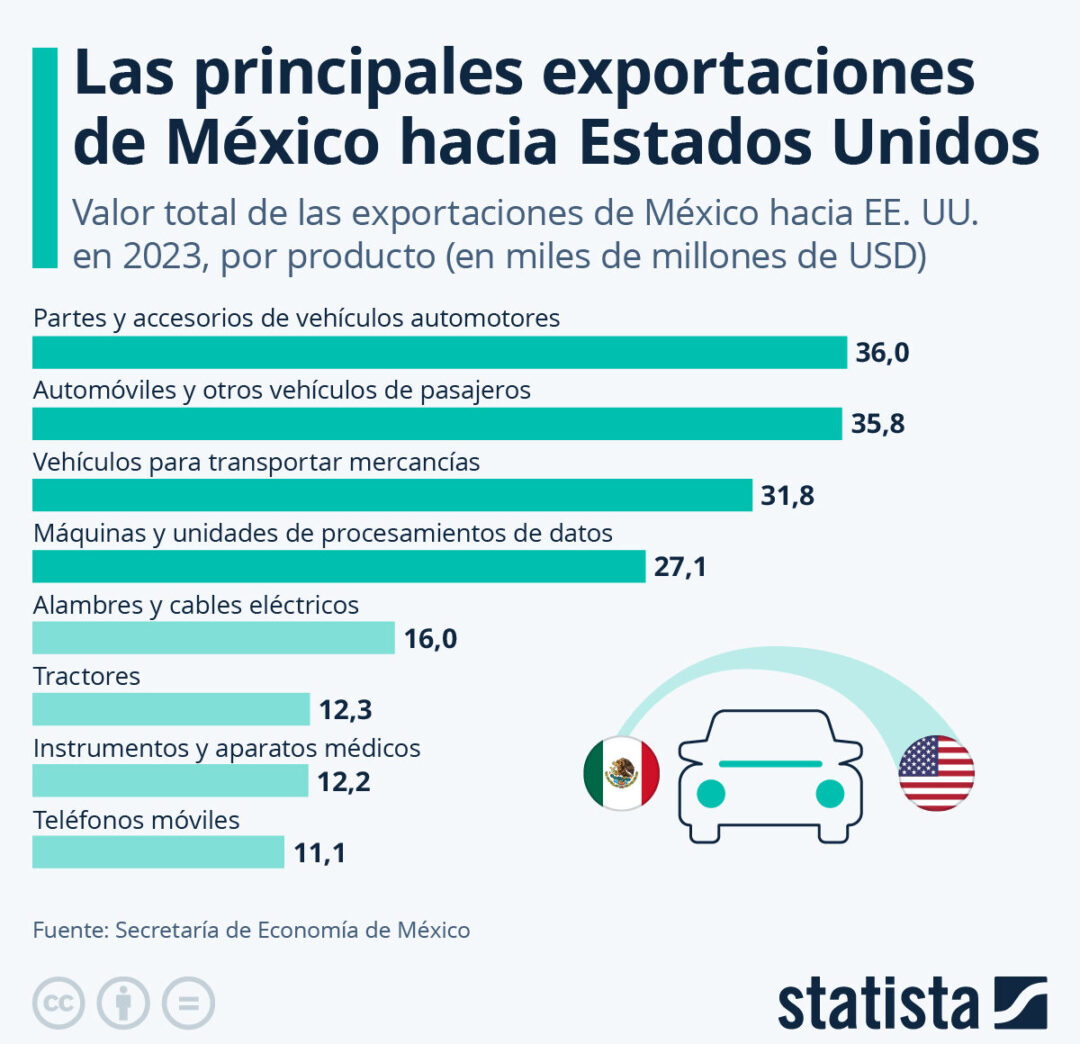
According to the chart, the automotive sector, which includes vehicles, parts, and accessories, accounts for over $70 billion in Mexican exports to the U.S. This highly integrated supply chain, with manufacturing facilities on both sides of the border, underpins the competitiveness of the North American auto industry. Imposing new tariffs could disrupt this finely tuned system, leading to increased production costs, reduced profit margins, and potentially higher consumer prices for vehicles.
Technological Exports and Innovation
The data also highlights Mexico’s growing expertise in the export of high-tech products, such as data processing equipment, electrical wires and cables, and medical instruments. These knowledge-intensive exports reflect the country’s efforts to move up the value chain and diversify its economic base. Tariffs on these goods could undermine Mexico’s technological competitiveness and hinder its ability to attract foreign investment in these strategic sectors.
Supply Chain Disruptions
Many of Mexico’s top exports, including vehicles for transporting goods and machinery, are critical components of integrated regional supply chains. Disrupting the flow of these products could have cascading effects, leading to production delays, inventory shortages, and logistical challenges for businesses on both sides of the border. This could ultimately impact the competitiveness of North American manufacturers and their ability to serve global markets.
Broader Economic Implications
Beyond the direct impact on specific industries, raising tariffs on Mexican exports could have wider economic ramifications. Such measures could trigger retaliatory actions from Mexico, potentially leading to a trade war that could dampen overall bilateral trade, investment, and economic growth. This could have negative consequences for employment, consumer prices, and the competitiveness of both countries in the global marketplace.
Maintaining Cooperation and Competitiveness
Given the depth and complexity of the trade relationship between Mexico and the United States, policymakers must carefully consider the potential consequences of any actions that could disrupt this vital economic partnership. Fostering continued cooperation, harmonizing regulations, and investing in the modernization of shared infrastructure could help maintain the competitiveness of North American industries and preserve the region’s position in global supply chains.
In conclusion, the data on Mexico’s primary exports to the U.S. highlights the need for a nuanced and collaborative approach to managing the bilateral trade relationship. Unilateral tariff hikes could have far-reaching implications, potentially undermining the competitiveness of key industries, disrupting regional supply chains, and hindering economic growth on both sides of the border. Maintaining an open, stable, and mutually beneficial trade environment should be a top priority for policymakers in both countries.
MUST Read Articles:
-
Welcome to Woven City: Toyota’s $1.5 Billion Experiment in Future Living
-
PlayStation at 30: A Strategic Analysis of Gaming Leadership in Latin America
-
From Third Place to Pay-to-Stay: Starbucks’ Bold New Direction Under CEO Brian Niccol
-
What is pDOOH and Why Is It Critical for Modern Marketing Plans?