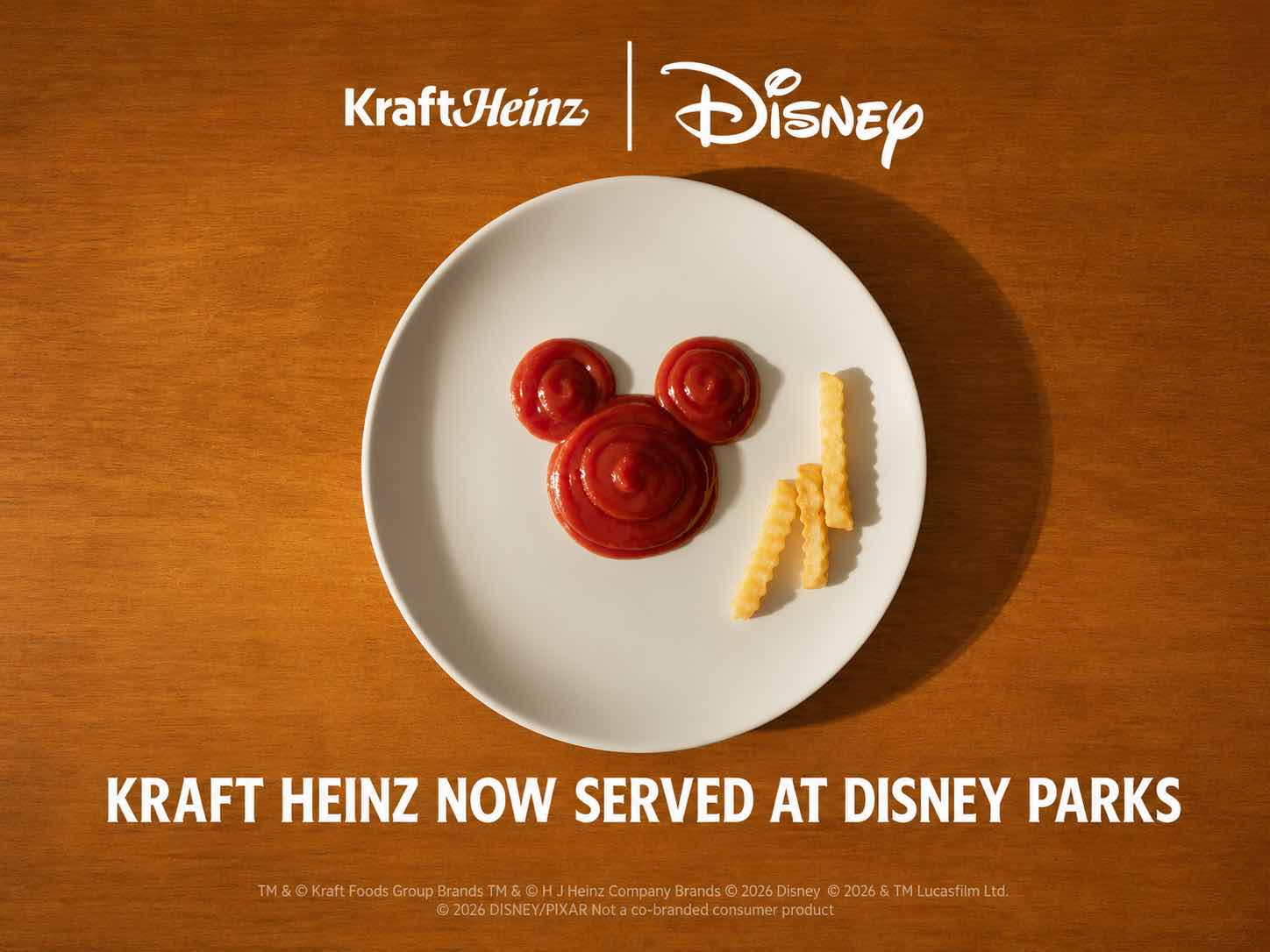
Kraft Heinz and The Walt Disney Company are bringing together two worlds deeply rooted in family memories: everyday food and entertainment. The companies announced a multi-year strategic alliance that will integrate brands such as Heinz, Kraft Mac & Cheese and Philadelphia Cream Cheese into dining experiences, content, products and activations connected to the Disney ecosystem.
The agreement goes far beyond placing ketchup bottles in theme park restaurants. The collaboration will extend across locations at Walt Disney World Resort, Disneyland Resort and Disney Cruise Line, as well as opportunities involving studios, streaming platforms, digital campaigns and products inspired by Disney franchises. A total of 10 Kraft Heinz brands may participate in the initiative, although the company initially highlighted Heinz, Philadelphia and Kraft Mac & Cheese.
From food supplier to experience partner
The alliance makes Kraft Heinz the exclusive supplier in selected categories, including condiments, macaroni and cheese, and cream cheese, across Disney parks, hotels and cruise ships in North America. The rollout will include new menu items, Heinz condiment stations designed specifically for the parks, and experiences connected to stories and characters from Disney’s portfolio.
According to The Wall Street Journal, the first major public appearance will take place during D23: The Ultimate Disney Fan Event, scheduled for August 14–16 in Anaheim. Heinz will introduce new sauces from its so-called Sauce Vault, offering a preview of the activations planned throughout the year.
The commercial logic is powerful. Disney gains familiar products that can be naturally incorporated into its dining experiences, while Kraft Heinz gains access to environments where consumer attention, emotion and engagement are considerably stronger than in a supermarket aisle.
A bottle of ketchup in a conventional restaurant is a functional product, but the same bottle integrated into an experience inspired by Star Wars, Pixar or Mickey Mouse can become content, a photograph, a souvenir and a conversation. The alliance seeks to move Kraft Heinz beyond the family table and into the moments when families create shared memories.
Nicolas Amaya, President of Kraft Heinz North America, said both companies have been part of family life for generations and that the agreement is intended to bring them together “in the moments that matter most,” both inside the parks and at home.
Kraft Heinz expands its experiential marketing strategy
The agreement with Disney is part of a broader strategy to take Kraft Heinz brands beyond the supermarket. In March, the company signed a five-year global partnership with the NFL, making Kraft Heinz the league’s first official condiment partner and opening opportunities across stadiums, campaigns, packaging and fan experiences.
Since 2025, Kraft Heinz has also maintained a partnership with Live Nation that introduced its products across approximately 80 concert and festival venues in the United States. Heinz and Kraft Mac & Cheese gained a presence on menus, in entertainment spaces and through activations designed to connect food with live music.
Disney, however, represents a move on a considerably larger scale. The collaboration brings together foodservice, intellectual property, media, streaming, licensing, theme parks, cruise ships and at-home products. The goal is not simply to gain distribution, but to place the brands inside a storytelling system capable of extending an interaction from a theme park visit to a later purchase at the supermarket.
The company needs precisely that kind of cultural expansion. During the first quarter of 2026, Kraft Heinz reported a 0.8% increase in net sales, while organic sales declined 0.4% and adjusted operating income fell 11.8%. In a business built around historic brands, familiarity can be a strength, but it can also become a form of stagnation when consumers stop finding new reasons to choose them.
Recommended: Disney announces new themed areas for Disneyland Paris
The risk of turning magic into advertising
The alliance offers an obvious opportunity, but it also carries a risk. Disney carefully protects the consistency of its environments and experiences; an overly visible commercial presence could turn integration into interruption.
The challenge will be preventing the parks from becoming themed supermarkets. A sauce station can improve the experience when it serves a practical purpose and adds thoughtful design or storytelling. A succession of packages, logos and promotions placed without restraint could have the opposite effect: reminding visitors that even fantasy has a sponsor.
The collaboration will also need to prove that it generates more than exposure. Kraft Heinz will have to measure product trials, on-site sales, subsequent searches, the performance of special editions, growth among households with children and its ability to attract younger consumers. Disney, for its part, will need to demonstrate that the integration improves the dining experience rather than merely adding commercial revenue.
Although the agreement has been presented as a wide-ranging alliance between two global companies, its initial physical rollout will be concentrated across parks, resorts and cruise ships in North America. Its international potential will depend on how campaigns, content, licensing and future extensions into other markets evolve.
Kraft Heinz is not simply buying space at the table; it is trying to enter people’s memories. Disney is not merely adding food products, but brands capable of extending its experiences into the home. The agreement will work when a product stops feeling like commercial placement and becomes a natural part of the story. On that almost invisible boundary, the alliance will prove whether it can create magic—or simply more advertising.