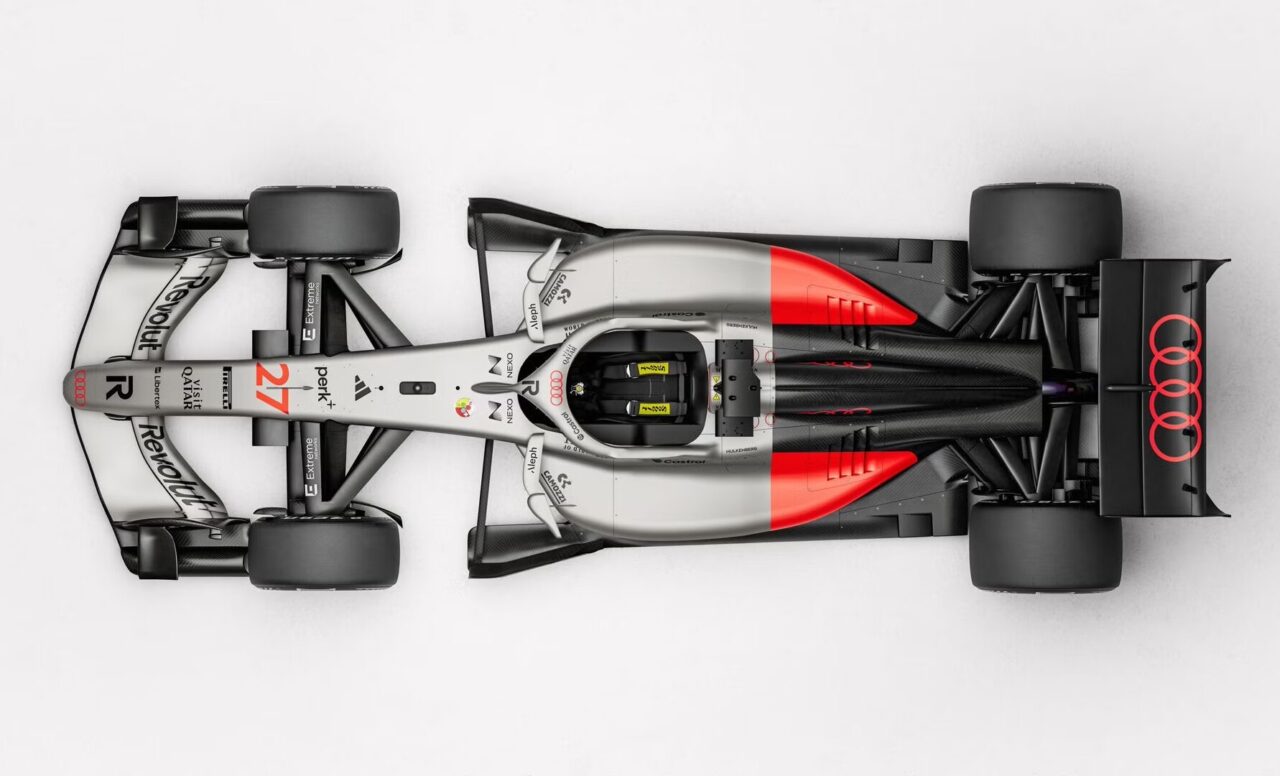
For years, Formula 1 represented the pinnacle of global visibility: a logo on a car, presence in 20 countries, and audiences in the hundreds of millions. But in 2026, that logic is starting to fall short. The announcement of the partnership between Audi Revolut F1 Team and Aleph makes one thing clear: the championship’s new value lies not only in how many people are watching, but in how deep the connection is with each market.
With a 24-race calendar around the world, F1 has become one of the most complex marketing platforms in the sports ecosystem. Simply being present is no longer enough. Today, teams must translate their global narrative into local cultural contexts—and do so in real time.
From sponsorship to cultural enablement
Unlike traditional agreements—where brands essentially buy exposure—the relationship with Aleph points to something different: enabling relevant activations in each market, from identifying local communities to digitally amplifying experiences that feel authentic.
This approach sets it apart from other recent partnerships in F1, such as those with mass-consumption brands or fintechs that replicate identical campaigns across countries. Here, the ambition is not to standardize, but to localize without losing scale.
Stefano Battiston, the team’s Chief Commercial Officer, sums it up clearly: the platform is global, but relevance is always local. That sentence captures one of the most important shifts in sports marketing today.
F1 as a “glocal” laboratory
Audi’s entry into Formula 1 already signaled a paradigm shift: an automotive brand arriving not just to compete, but to build a long-term narrative. With Aleph as a partner, that story is supported by an infrastructure that connects digital advertising, data, platforms, and local ecosystems.
This is especially relevant in emerging, high-growth markets, where F1’s audience expands year after year, but where emotional connection cannot be built through aspirational branding alone. It is built when fans feel the team is speaking to them—in their language, within their culture, and on their everyday platforms.
How it compares to the rest of the grid
While some teams continue to rely on high-visibility global deals—energy drinks, fashion, luxury—Audi Revolut F1 Team appears to be betting on a more surgical model: less uniform noise, more localized impact.
It’s no coincidence that this strategy is announced ahead of the team’s official debut. In a grid saturated with messages, differentiation no longer comes from who shouts the loudest, but from who understands their audiences best.
What this partnership says about the future of F1 marketing
Formula 1 is evolving from a global showcase into a network of interconnected micro-markets. Brands and teams that understand this shift will be able to turn visibility into cultural relevance—something far more valuable today than any number of impressions. Oxxo and McLaren, Mercado Libre and Alpine have already grasped this logic.
The question is not whether this model will prevail, but how quickly the rest of the paddock will adapt. Because in the F1 of 2026, winning off the track also requires millimetric precision.
And that race—unlike the others—is not decided by tenths of a second, but by real connection with people.