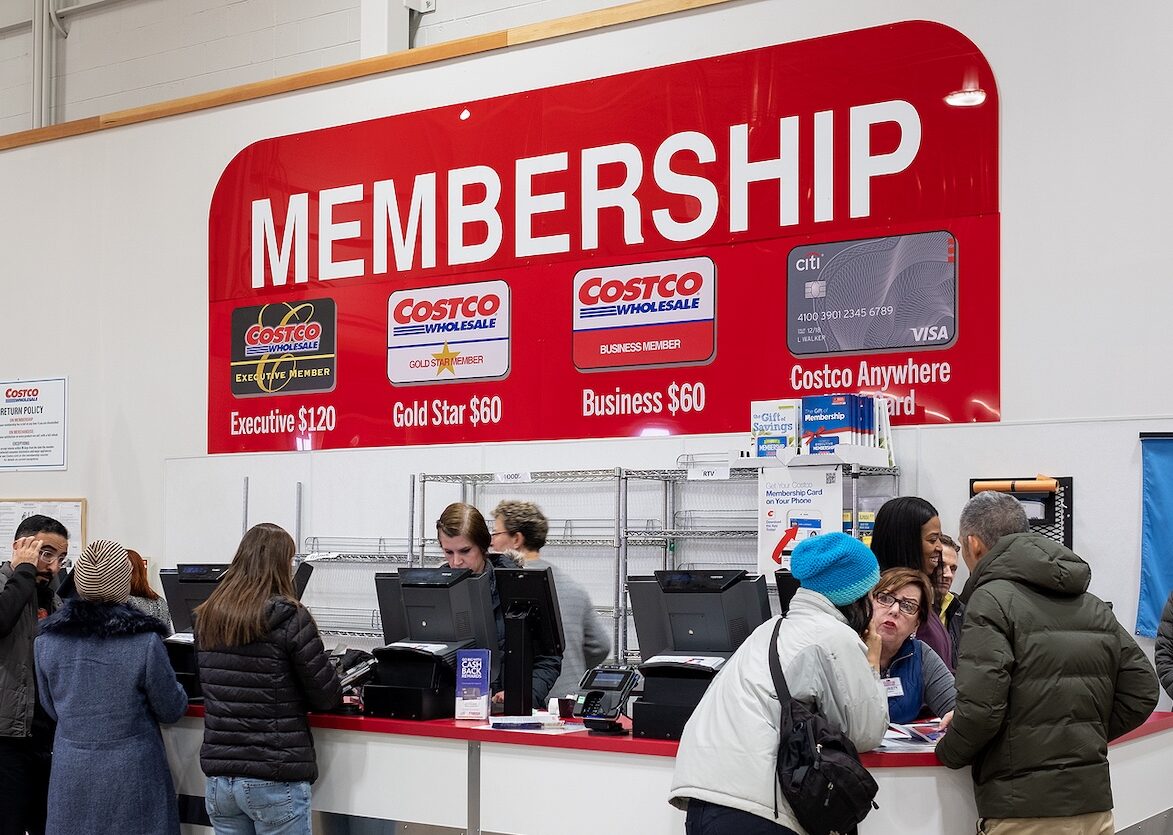
Over the past decade, the obituary of physical retail was written far too many times (Retail Apocalypse) and almost always too hastily. The narrative was simple: ecommerce would grow, stores would become obsolete, and the future would be a screen. In that period (2018–2023), images of abandoned retailers and shopping malls flooded social media (usually the same photographs). But the market did what it tends to do when theory falls in love with itself: it contradicted the script.
In 2025, offline spending still accounted for 77% of global retail, equivalent to US$14.4 trillion out of a total of US$18.9 trillion, according to EY based on Euromonitor data. Deloitte, for its part, states that 80% of purchases still happen in physical stores. The store did not die; it mutated.
That mutation is the key. The point of sale stopped being just a transactional endpoint and became a hybrid platform. Deloitte describes the “store of the future” as a connected, intelligent, experience-led hub capable of integrating front- and back-office functions, unifying data to personalize shopping, and improving operational efficiency through automation. In other words, the store is no longer just square footage with inventory: it is now commercial, technological, and media infrastructure.
1. From point of sale to point of contact
The first major transformation is media-driven. Physical retail no longer just hosts products; it now sells attention. This is the logic of retail media translated into the tangible world: screens, in-store audio, contextual activations, intelligent sampling, and creativity deployed at the exact moment of decision. McKinsey reports that 55% of advertisers plan to increase their commerce media budgets over the next 12 months, and 53% already work with five or more commerce media networks—clear evidence that this channel is no longer experimental but structural within the media mix.
The pressure is not only supply-side. Nielsen estimates that retail media in the United States will reach $60 billion in 2025 and $100 billion by 2028. Additionally, 65% of marketers globally believe retail media networks will play a more significant role in their media mix over the next 12 months; in North America the figure rises to 74%, and in Latin America it reaches 69%. The message is clear: retail no longer competes only for sales—it competes for advertising budgets.
Europe confirms the trend, albeit at a different pace. IAB Europe reports that more than 90% of buyers allocate at least 41% of their digital retail media investment to on-site formats, while off-site investment grows and in-store digital screens gain interest, though still with lower penetration. This reveals two things simultaneously: retail media has matured as a discipline, and the physical front remains in expansion—not saturation.
2. The store as experience, not a glorified warehouse
The second mutation is experiential. What matters here is not that stores want to “deliver experiences”; it is that they no longer have a choice. Deloitte found that four out of ten retail executives plan to reinvest in the in-store experience—from renovations to technology—to drive more traffic. And nearly two-thirds of consumers want to see and touch products before buying. The store, therefore, regains value not as a substitute for digital, but as what digital cannot fully replicate: materiality, proximity, trial, trust, and community.
This explains why physical space is increasingly operating as a showroom, community hub, brand laboratory, and rapid-resolution point. Deloitte even outlines “five faces” of the store: transaction, service, experience, fulfillment, and community building. The key lesson is that physical retail will not survive on nostalgia, but on specialization. Generic stores lose; strategically defined stores win.
3. The store as a data hub
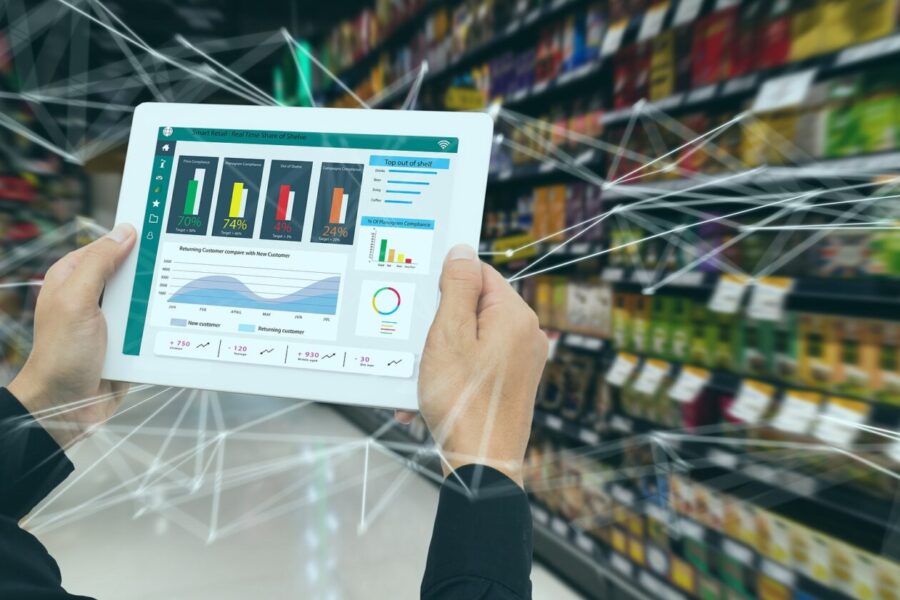
The third transformation—perhaps the most profitable in the long term—is that physical retail has become a data hub. For years, the digital ecosystem enjoyed the convenience of tracking clicks, sessions, and conversions. But with increased privacy restrictions and reduced reliance on third-party cookies, first-party data has regained central importance. Retail has something platforms and publishers envy: signals of intent and purchase tied to real-world behavior. That is why Nielsen defines the appeal of retail media precisely in its ability to connect brands with consumers through robust first-party data.
Mexico already offers clear examples. Walmart Connect México announced in 2025 a strengthened phase of its omnichannel strategy based on secure data collaboration with brands and agencies. The company claims it can activate personalized segments using combined first-party data from Walmart and its partners, leveraging more than 3,000 physical stores and clubs, ecommerce platforms, and immersive brand experiences. More importantly, its offering includes insights from both in-store and online purchases. This is no longer a traditional retail operation; it is a media and data architecture.
Liverpool provides another clue to where the Mexican model is heading. In its 2025 corporate presentation, the company defines itself as an omnichannel retailer and summarizes its strategy with a revealing formula: stores as service centers, fulfillment centers, and experience centers. Additionally, it operates 125 Liverpool stores, 194 Suburbia stores, and millions of proprietary credit accounts, turning its physical and financial footprint into an extraordinary source of customer insight. In retail, the most powerful data rarely comes from clicks alone—it comes from the intersection of purchase, visit, credit, assortment, and recurrence.
Mexico vs. the rest of the world
Mexico enters this conversation with an interesting paradox. On one hand, ecommerce is already significant: AMVO reports that in 2025 it reached 941 billion pesos, with 77.2 million buyers. But representing 17.7% of retail sales also means that more than four-fifths of commerce still occurs outside the online channel. That apparent “gap” compared to more digitized markets can, in fact, be read as a massive opportunity to monetize the sales floor, turn physical traffic into audiences, and use stores as large-scale generators of first-party data.
The case of OXXO is perhaps the most illustrative. In 2025, FEMSA reported that Retina Media, OXXO’s retail media platform, opened automated access to a network of more than 8,000 digital screens across Mexico. The same report cites a Grand View Research estimate that retail media in Mexico generated US$1.995 billion in 2024 and could reach US$3.204 billion by 2030. It also highlights that 88% of retail transactions in the country still occur in-store. In other words: Mexico not only has retail media potential; it has a massive physical ecosystem to scale it.
And OXXO adds an even more strategic layer. Fast Company México reported that the chain issues 13 million receipts daily and that its Spin Premia program exceeds 27 million active users. That combination of physical reach, purchase frequency, and digital loyalty explains why the store is no longer just a place where products are exchanged for money. It now generates highly valuable consumption signals.
Mexico has the asset, but not yet the system
Here comes the uncomfortable part. Mexico has traffic, commercial density, large-scale retail chains, loyalty programs, and a much more robust offline base than many markets obsessed with screens. What it still lacks, at the level of the United States, is mature measurement standardization, broad interoperability among data owners, and a sufficiently sophisticated discipline to consistently demonstrate value. Europe, even with stricter privacy constraints, is already discussing standards, investment levels, and operational maturity of retail media as a formal category. Mexico, meanwhile, risks falling in love with the narrative before fully building the methodology.
The second warning is just as important: not every in-store screen is retail media, and not every in-store experience builds brand. Some retailers confuse digitization with strategy, as if filling aisles with screens were enough to monetize attention. It is not. Real value emerges when media, experience, and data work together—when the store impacts, learns, and improves. Without that triangle, physical retail risks becoming an expensive theme park or, worse, a low-intelligence advertising inventory. This is the line that separates retailers renting space from those building a new business unit.
5 implications for brands and retailers
1. The point of sale has become the last mass medium
In an environment where digital advertising faces saturation, blockers, and privacy restrictions, physical retail offers something few channels can: attention at the exact moment of purchase decision. It is no coincidence that retail media is growing faster than traditional advertising.
2. Physical traffic is now advertising inventory
Each store visit is no longer just a sales opportunity, but a monetizable audience. Digital screens, brand activations, and contextual formats turn shopper flow into a media asset for advertisers.
3. Retail’s real advantage is first-party data
Unlike many digital platforms, retailers can connect advertising exposure data with actual purchase data, closing the loop between marketing and sales in a way few media channels can.
4. The store becomes a brand experience laboratory
While ecommerce optimizes efficiency, physical space optimizes emotion. Successful stores are no longer glorified warehouses; they are stages where consumers test, interact, and build trust with brands.
5. Mexico has an opportunity other markets have already lost
With more than 80% of retail still happening in physical stores, the country has a massive base of traffic that can be transformed into audiences, experiences, and proprietary data. The question is no longer whether physical retail will survive, but who will learn to monetize it best.
Let’s get to the core
Physical retail did not come back; it reinvented itself. It is no longer just where the sale ends, but where attention is monetized, experiences are differentiated, and first-party data is captured. In the United States, the model is more monetized. In Europe, more structured. In Mexico, more open—and still in formation. But that is precisely where the opportunity lies: in a country where stores still concentrate the majority of commerce, the sales floor can become the most powerful medium that is still undervalued.
The store is no longer just a channel. It is a medium with shelves, an experience with inventory, and a database with automatic doors.
Keep reading more articles on retail:
-
Ecommerce in Mexico reaches 941 billion pesos and now represents nearly one-fifth of retail
-
The consumer is not omnichannel: they are impatient
-
Hanson redefines permanence in an industry obsessed with speed
-
The Latin American consumer: volatility, value and resilience
-
The silent shock reshaping consumption in 2026
-
Retail talks about artificial intelligence but only uses it to chat with customers